
Plasterboard - Fischer from Santorini
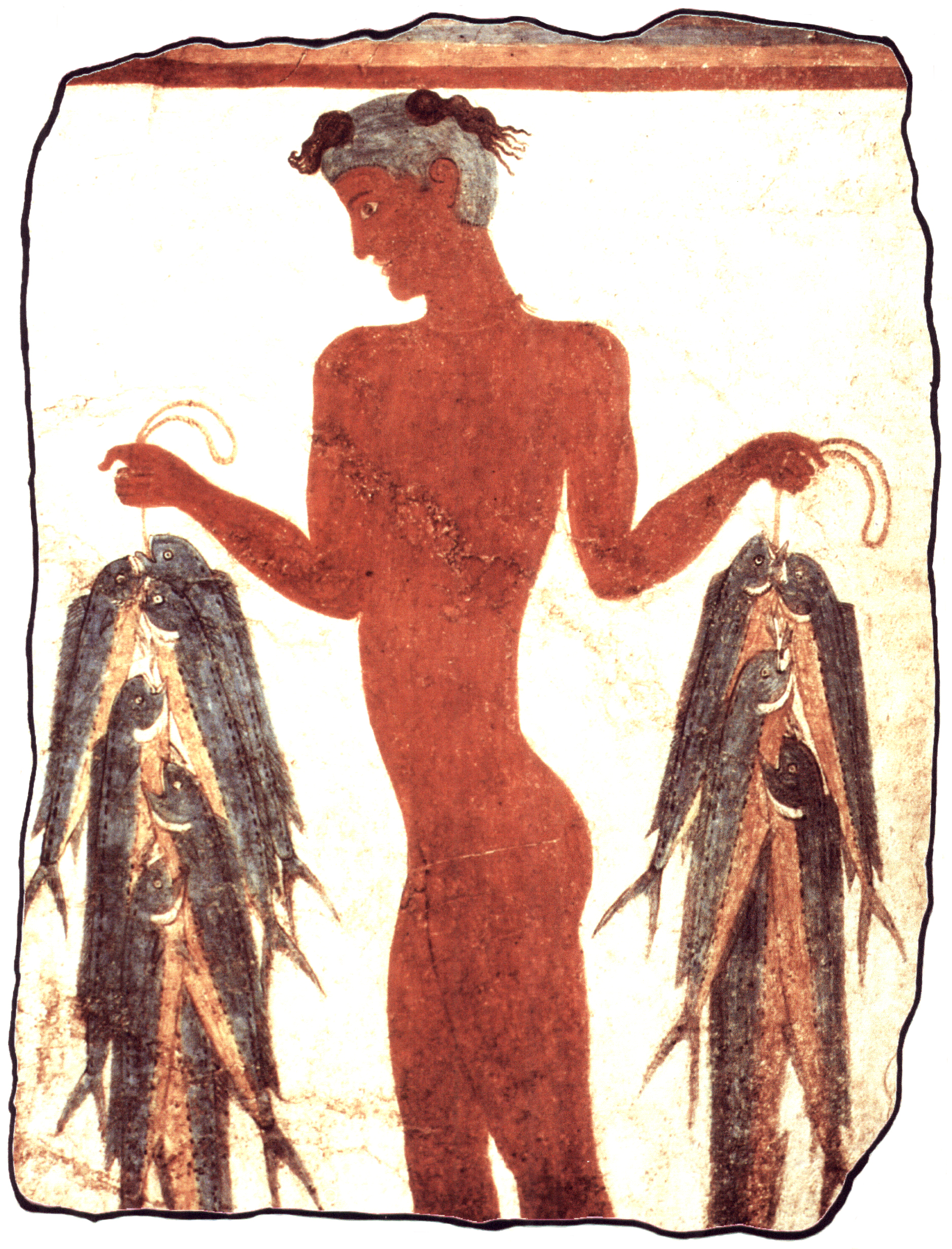
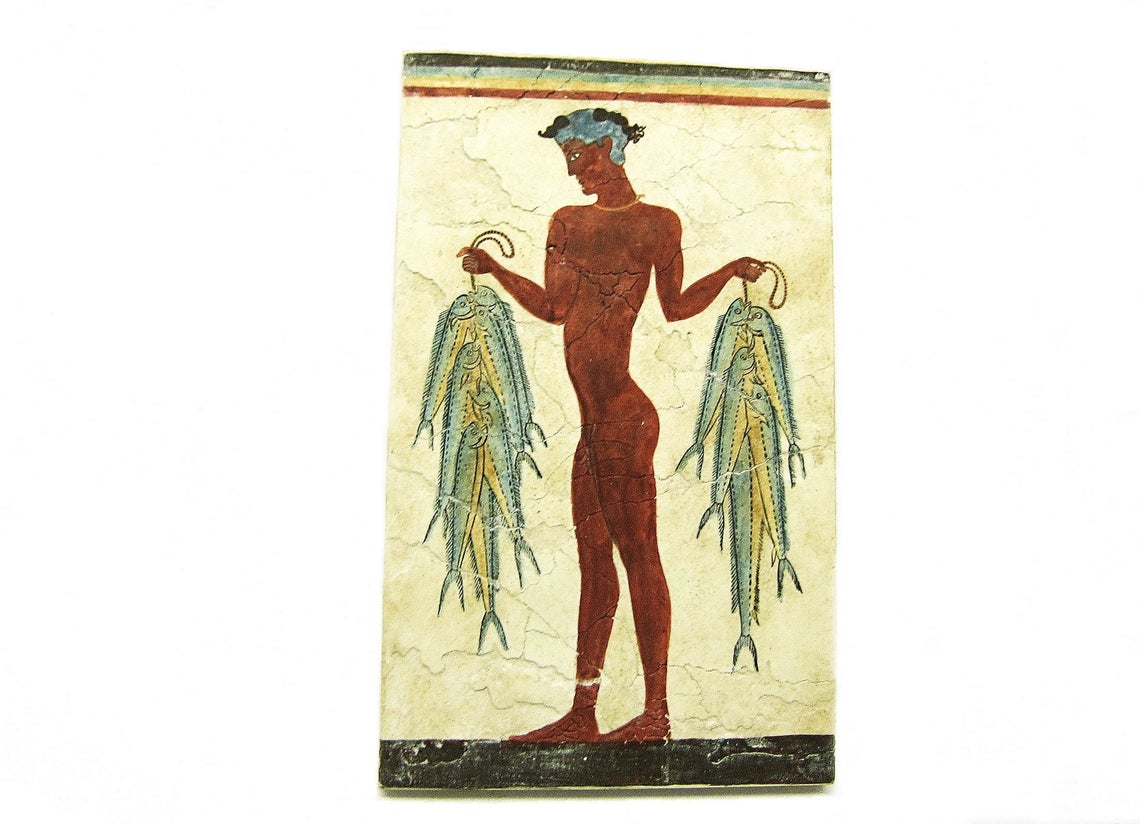
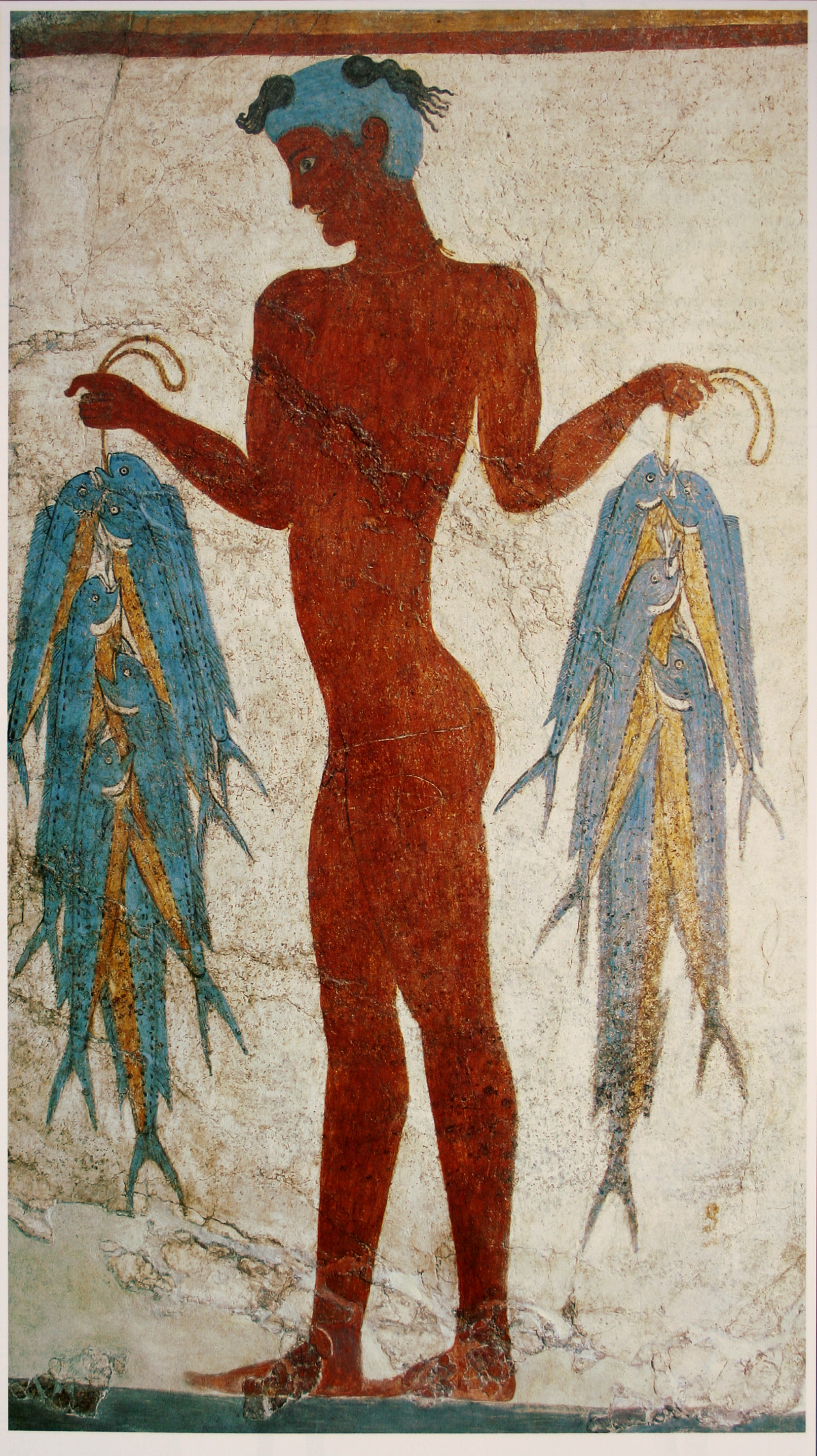
Plasterboard with motif "Fisherman"
approx. 17 x 22 x 1.5 cmYouthful adorant with bundles of fish,
Fresco on the north wall in room 5 on the upper floor of the West House.
Contents: A plaster plate, a template with outlines, a painting or colour instruction, a sheet of carbon paper. a short instruction.
Distributor:
PGI-Skarabäus, Im Kränzliacker 9, 79576 Weil am Rhein, Germany, pgi-shop.de
PGI-Skarabäus, Lerchenstrasse 38, 4147 Aesch, Switzerland, pgi-shop.ch
| Aspiration scale: | Easy |
|---|---|
| Time Line: | 1,5 Hours |
The Minoans
They were the first advanced civilisation in Europe, their seafarers dominated the Mediterranean for centuries and their bull cult was the model for the legend of the Minotaur: The Bronze Age empire of the Minoans, named after the legendary king Minos, is still legendary today.
The Minoans built large palace complexes on Crete around 5,000 years ago, constructed roads and developed a script that is still undeciphered today. Their sphere of influence stretched from the Aegean islands to Cyprus and the coast of Asia Minor to Mesopotamia and Egypt. But as magnificent and archaeologically productive as Minoan palaces such as Knossos or Phaistos are, their builders still pose numerous riddles to researchers. The reason for the decline of the legendary Minoan empire is also not clearly understood.
The fisherman from Santorini
Akrotiri is an archaeological site in the south of the Greek island of Santorini. In 1967, archaeologists discovered a city of the Cycladic culture with a strong influence of the Minoan culture. The city was buried in its heyday by a volcanic eruption and thus preserved for over 3500 years until its uncovering in the 20th and 21st centuries. The excellent state of preservation of the buildings and outstanding frescoes allows insight into the social, economic and cultural history of the Bronze Age in the Aegean.
The excavation site is named after the present-day village of Akrotiri. It lies about 700 metres northwest above the excavation on a hill with the oldest volcanic rock on the island and is dominated by the ruins of a castle complex from the time of Venetian rule (1204-1537).
The fresco
The sculptural naturalistic silhouette of a young fisherman is from the 16th century BC and was found in a house in Akrotiri. The fish appear to be mackerel or small tuna. It is now in the National Museum in Athens.
Adult supervision:
Children under 14 years of age should use the kit under adult supervision to avoid risks from improper handling.
Risk of injury:
Be particularly careful when handling pointed and sharp parts! Use sharp tools carefully, and if necessary take appropriate safety measures to avoid injuries.
Be careful with small parts:
Hazard of suffocation! Keep small parts out of the reach of small children.
Fire hazard:
Keep away from open fire and heat sources. Product contains highly flammable materials.
Intended use:
The kit may only be used in accordance with the enclosed instructions. Independent modifications can affect the functionality and safety of the built model.