


Writing like in ancient Egypt
Product number:
2639
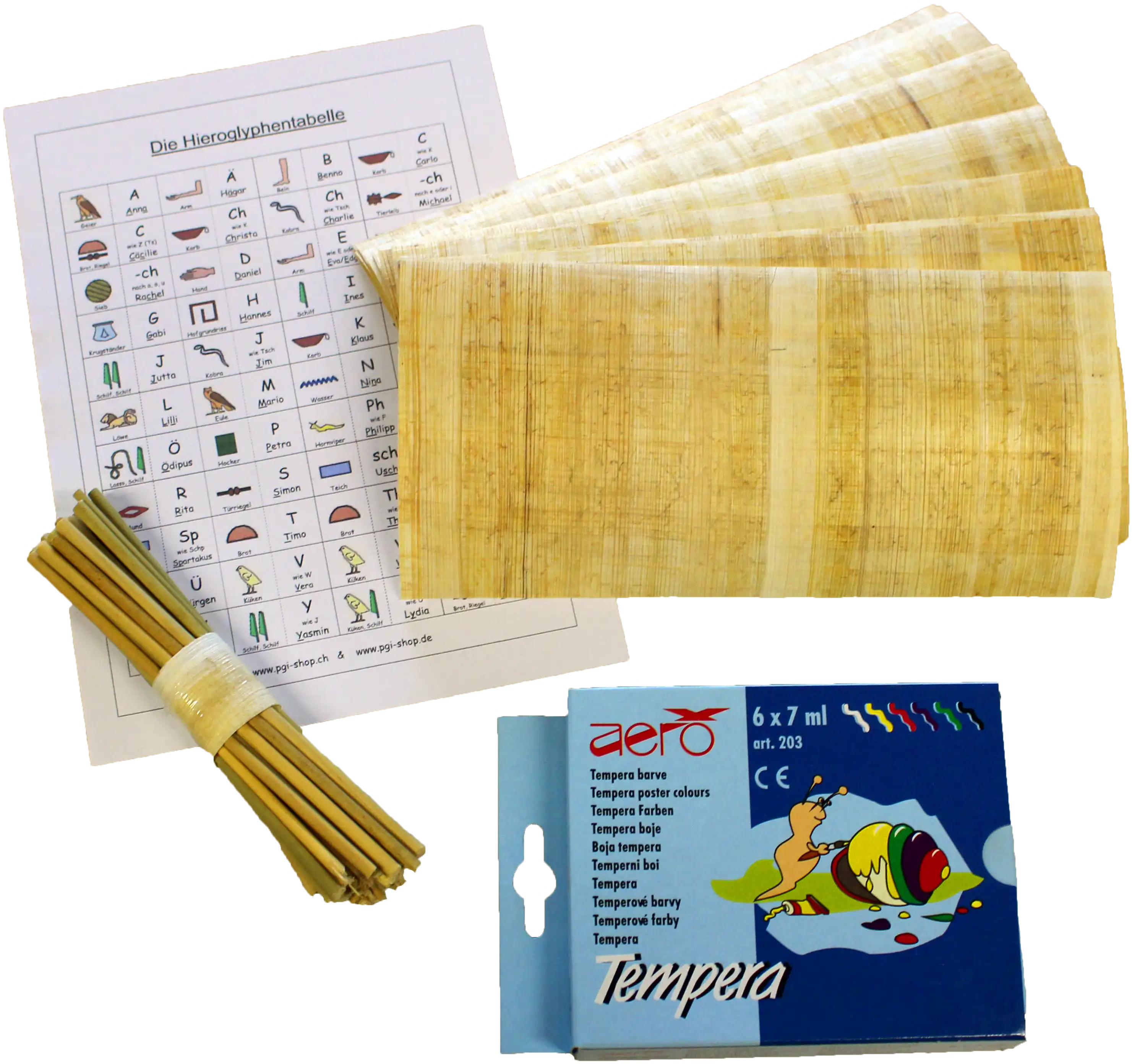
Papyrus painting set with rushes and tempera colours
Writing with dried rushes on papyrus strips - is that even possible?
It works surprisingly well. Papyrus absorbs watercolours, tempera paints or ink just as well as paper. With a little skill, small brushes or pens can be made from the rushes.
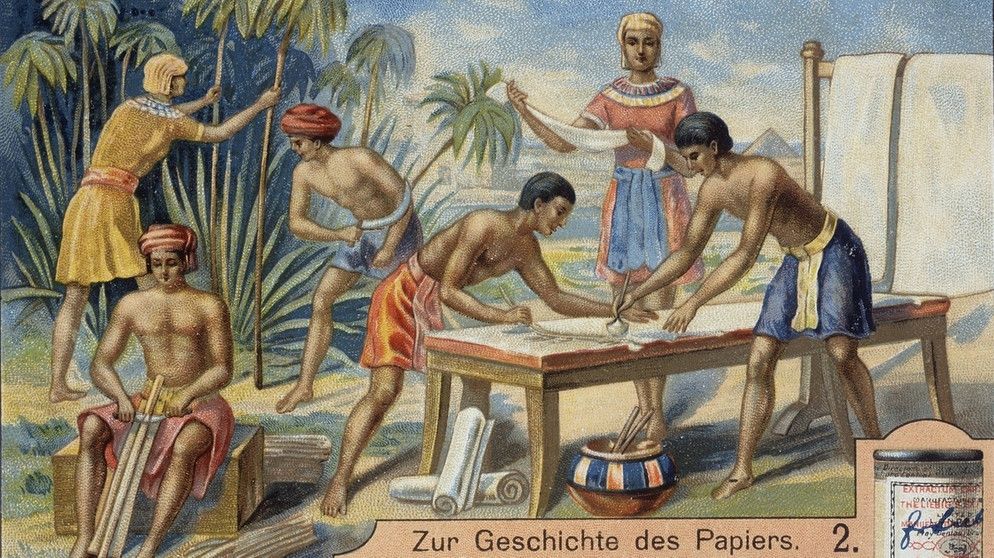
The papyrus comes from Egypt and is a purely natural product of the highest quality. Each sheet is laid by hand and therefore has a slightly different grain. Please also read the information on papyrus under ‘ Details and Product Attachments ’.
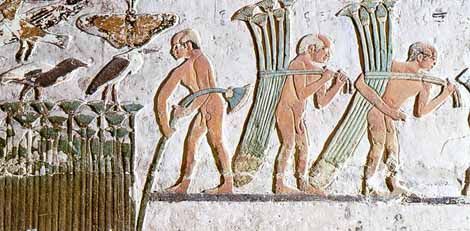
The rushes also come from the Nile Delta and are the authentic writing material from ancient Egypt. A detailed description of how to use them is enclosed.
The tempera colours come from Germany and are very suitable for painting and writing on papyrus. They can be applied in different thicknesses and are therefore ideal for designing papyri. This colouring set is ideal for lessons or as a gift.
Set contents:
20 hand-painted papyri 10 x 20 cm
30 rushes approx. 13 cm
6 tempera colours 7 ml each
Painting instructions
Hieroglyphic table
PGI Papyrus:
made from hand-laid papyrus, produced in Egypt
Distributor:
PGI-Skarabäus, Im Kränzliacker 9, 79576 Weil am Rhein, Germany, www.pgi-shop.de
PGI-Skarabäus, Lerchenstrasse 38, 4147 Aesch, Switzerland, www.pgi-shop.ch
| Aspiration scale: | Easy |
|---|
Product information "Writing like in ancient Egypt"
History of hieroglyphic writing
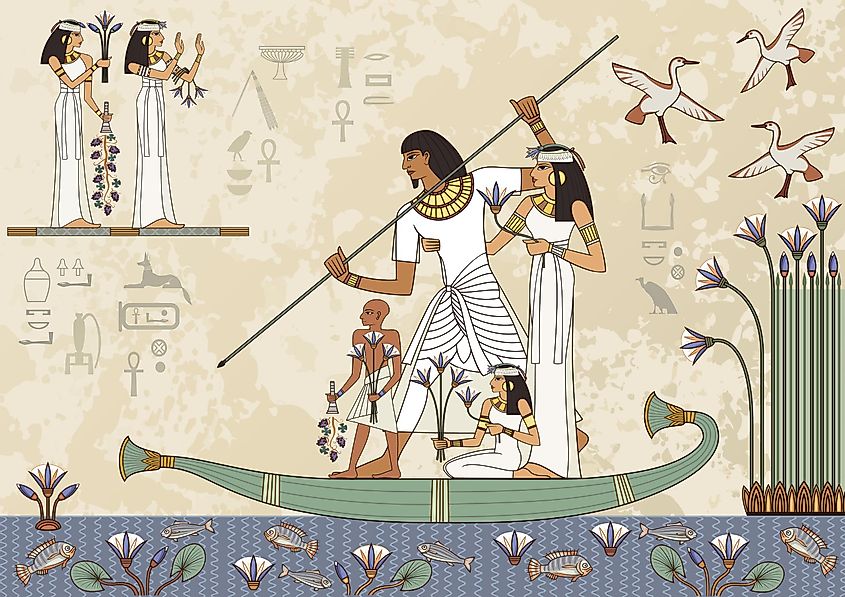
Hieroglyphic writing emerged in Egypt around 3000 BC, almost simultaneously with the oldest scripts in Mesopotamia and the Near East. With the emergence of the centralised state, the need arose to be able to record administrative and economic processes in writing. This inevitably led to the emergence of the profession of scribe, which was crucial for the proper continuation of state affairs and thus for the preservation of the state and its administration. This profession opened up access to important positions in administration and business.
Education
The pupils came from different social classes and started their training between the ages of five and ten. In accordance with the requirements of administration and business, the training of scribes primarily involved knowledge of writing. In addition, they possessed specialised knowledge that was necessary for economic life, such as writing documents and contracts. The basic rules of maths and the calculation of areas and volumes were also included. In the Old Kingdom, the training of scribes was organised in such a way that one or more pupils were apprenticed to a scribe and thus learned this profession. The children of scribes often took up this profession in turn. Throughout the ages, not only the state administration but also the temple and military administration increasingly needed trained scribes.
Talented scribes could also train as interpreters. At the time of Amenhotep III and under Akhenaten, there were also scribes who were able to write international correspondence in cuneiform. Hieroglyphic script was not suitable for rapid writing, so hieratic cursive script was used alongside it. Learning was done by writing down and repeated recitation or enquiry. In a world of very limited memorisation, training the memory was the only way to have all important information quickly available later in professional life.
Hieroglyphic writing emerged in Egypt around 3000 BC, almost simultaneously with the oldest scripts in Mesopotamia and the Near East. With the emergence of the centralised state, the need arose to be able to record administrative and economic processes in writing. This inevitably led to the emergence of the profession of scribe, which was crucial for the proper continuation of state affairs and thus for the preservation of the state and its administration. This profession opened up access to important positions in administration and business.
Education
The pupils came from different social classes and started their training between the ages of five and ten. In accordance with the requirements of administration and business, the training of scribes primarily involved knowledge of writing. In addition, they possessed specialised knowledge that was necessary for economic life, such as writing documents and contracts. The basic rules of maths and the calculation of areas and volumes were also included. In the Old Kingdom, the training of scribes was organised in such a way that one or more pupils were apprenticed to a scribe and thus learned this profession. The children of scribes often took up this profession in turn. Throughout the ages, not only the state administration but also the temple and military administration increasingly needed trained scribes.
Talented scribes could also train as interpreters. At the time of Amenhotep III and under Akhenaten, there were also scribes who were able to write international correspondence in cuneiform. Hieroglyphic script was not suitable for rapid writing, so hieratic cursive script was used alongside it. Learning was done by writing down and repeated recitation or enquiry. In a world of very limited memorisation, training the memory was the only way to have all important information quickly available later in professional life.
Product safety-33
Adult supervision:
Children under 14 years of age should only work with these items under adult supervision to avoid risks from improper handling.
Do not ingest:
Papyrus and rushes are a natural product and should not be ingested.
Be careful with small parts:
Hazard of suffocation! Keep small parts out of the reach of small children.
Fire hazard:
Keep away from open fire and heat sources. Product ignites quickly.
 Anleitung zum Bemalen von Papyrus